Most auto repair shops have a list of inactive customers.
The problem is not the list. The problem is how it is used.
Many shops treat all inactive customers the same. They either ignore them or send the same “we miss you” message to everyone.
This approach leads to wasted marketing spend and low response rates.
Not all inactive customers are equal. Some are very likely to return. Others are not.
Research from the Harvard Business Review shows that about 1 in 4 past customers return when targeted with winback campaigns. That makes your inactive customer list one of your most valuable growth opportunities.
Customer Lifecycle Definitions for Auto Repair Shops
Before you can build an effective reactivation strategy to increase your customer retention in your auto repair shop, you need clear definitions.
Active Customers (0 to 9 months)
- Recently serviced
- High familiarity with your shop
- Most likely to return without prompting
Lapsed Customers (9 to 15 months)
- Past expected service interval
- Still recognize your shop
- Strong potential to return with the right outreach
Lost Customers (16 months or more)
- Long period of inactivity
- Likely using another shop
- Lower probability of return
Why the Difference Between Lost and Lapsed Customers Matters
Segmenting customers correctly improves marketing performance in clear, measurable ways.
Higher ROI
Customer reactivation campaigns consistently outperform other marketing channels. Many businesses report them as their highest-return strategy. The same Harvard study says that reactivating lost customers can cost up to 5X less than new customer acquisition.
Faster conversions
Past customers already know your shop. They require less education and fewer touchpoints to return.
Higher value customers
Customers who come back often spend as much or more than they did previously, making them especially valuable over time.
Why Time Alone Is Not Enough
Lifecycle timing is the foundation, but it does not tell the full story.
Two customers in the 9 to 15 month range can behave very differently:
- One simply forgot and plans to return
- One had a poor experience and left
Time tells you when they stopped coming. It does not explain why.
A Smarter Way: Using Customer Feedback Signals
You do not need complex systems to improve targeting. Even basic feedback signals can help.
- Customers who had a positive experience are more likely to return
- Customers with unresolved issues are more likely to churn
- Customers who still engage with messages are easier to reactivate
Simple surveys or follow-up questions can help you identify these patterns and prioritize outreach more effectively.
How Reputation Data Improves Customer Segmentation
Online reviews provide clear signals about customer intent.
Positive review customers
- Higher trust
- More likely to return
- Ideal for reminder campaigns
Negative or no-review customers
- Higher risk of churn
- May require more thoughtful outreach
Silent but satisfied customers
- Did not leave a review
- Often easy to re-engage
Using this data alongside lifecycle timing helps you focus on customers most likely to convert.
Why Customer Reactivation Works
Customers do not always leave because they are unhappy.
Some leave to try something new. Others simply get busy.
Over time:
- New alternatives lose their appeal
- Negative experiences fade
- Familiar businesses regain value
Many customers will return if you reach out at the right time with the right message.
Customer Reactivation Strategy by Priority Level
Tier 1: High probability of return
- Lapsed customers in the 9 to 15 month range
- Positive reviewers
- Engaged customers
Strategy
- Service reminders
- Seasonal triggers
- Easy booking
Example SMS
“Hi [Name], you are due for your next oil change. We have openings this week. Book here: [link]”
Tier 2: Moderate probability
- Customers with neutral signals
- No strong engagement or feedback
Strategy
- Education
- Convenience
- Light incentives
Example Email
“Routine maintenance helps prevent expensive repairs. Here is what most drivers overlook and how to stay ahead.”
Tier 3: Recoverable customers
- Customers with negative experiences
Strategy
- Ask for feedback
- Address concerns
- Rebuild trust
Example SMS
“Hi [Name], it’s been a while since your last visit. If there’s anything we could have done better or anything you need now, we’d really appreciate the chance to help.”
Tier 4: Low probability customers
- 16 months or more inactive
- No engagement
Strategy
- Occasional campaigns
- Stronger offers
- Highlight improvements
Example Email
“It has been a while since your last visit. Here are some updates to our service experience and a special offer if you decide to return.”
How a CRM Supports Customer Reactivation
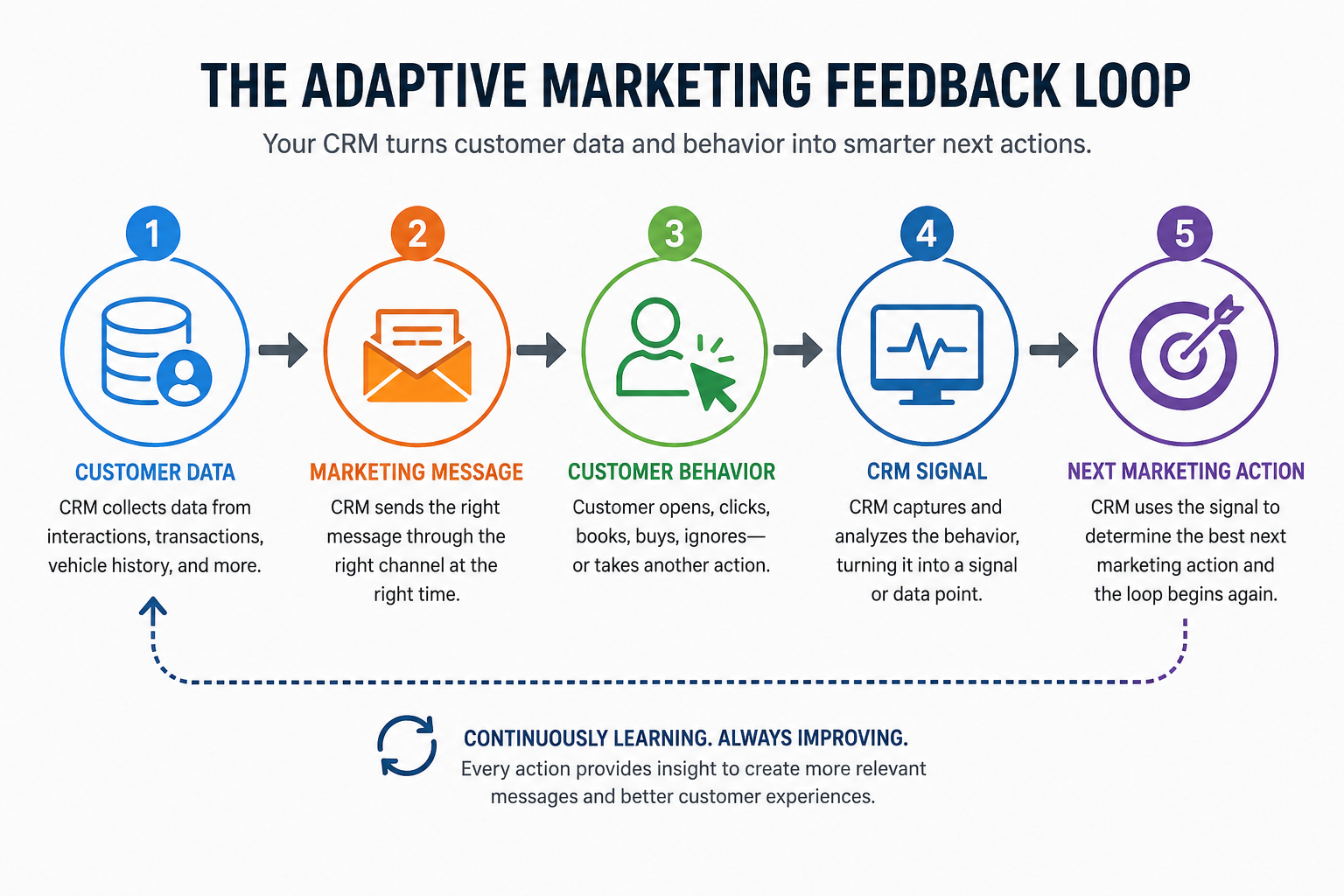
A CRM helps you execute this strategy consistently by:
- Tracking time since last visit
- Organizing customer data
- Segmenting customers automatically
- Triggering targeted campaigns
- Measuring results
This allows you to reactivate more customers without increasing marketing spend.
Common Mistakes to Avoid
- Treating all inactive customers the same
- Relying only on time-based segmentation
- Ignoring customer feedback signals
- Sending identical campaigns to everyone
- Overusing discounts
How to Reactivate More Customers in 6 Steps
- Define lifecycle stages as 0 to 9, 9 to 15, and 16 plus months
- Layer in basic customer feedback signals
- Segment customers by likelihood to return
- Prioritize the 9 to 15 month group
- Launch targeted campaigns
- Track and improve performance
Conclusion: Focus on the 9 to 15 Month Opportunity
Your biggest opportunity sits in the 9-to-15-month window.
These customers are no longer active, but they are not lost.
They are the easiest group to win back and the fastest path to new revenue.
Shops that prioritize this segment see better results with less effort.
If you are not segmenting customers by lifecycle stage and likelihood to return, you are leaving revenue on the table.
With HiBeam CRM, you can:
- Identify high-value lapsed customers automatically
- Send the right message at the right time
- Increase reactivation rates without increasing ad spend
Book a demo to turn your inactive customer list into a consistent source of revenue.
Author: Chris Matson is the Founder of HiBeam and an experienced automotive business and marketing professional. Since 2009, he has owned and operated independent auto repair shops while building an automotive-focused marketing agency. Earlier in his career, he served as CFO of a broadcast television group, adding financial and business leadership experience to his hands-on automotive and marketing background. Chris writes about automotive marketing, customer retention, communication, and strategies that help repair shops grow revenue.